
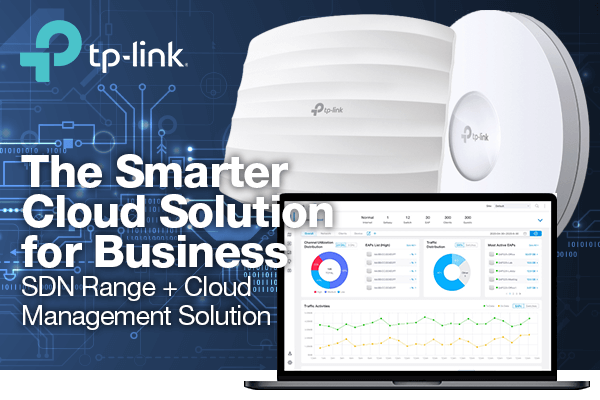
TP-Link Omada SDN: The 2026 Guide to AI-Driven Cloud Networking
As we move through 2026, the demand for seamless, high-capacity connectivity has moved beyond simple “internet access” to a requirement for “intelligent infrastructure.” Whether you are managing a high-density office, a multi-site retail chain, or a boutique hotel, the TP-Link Omada Software Defined Networking (SDN) platform has evolved into one of the most cost-effective, AI-integrated ecosystems on the market.
In this guide, we break down why Omada is the primary challenger to Ubiquiti UniFi and Cisco Meraki for 2026 deployments.
What is TP-Link Omada SDN?
Omada SDN is a centralized management platform that integrates gateways, switches, and access points into a single “pane of glass” interface. In 2026, this means more than just remote configuration; it means AI-native network optimization.
The ecosystem consists of four core pillars:
- Omada Wi-Fi 7 Access Points: Delivering Multi-Link Operation (MLO) for ultra-low latency.
- JetStream Switches: High-density PoE+ and PoE++ solutions up to 25G.
- SafeStream Gateways: High-performance VPN and SD-WAN routers.
- Omada Controllers: The “brain” of the network (Cloud, Hardware, or Software).
2026 Technical Spotlight: Why Choose Omada?
1. Wi-Fi 7 & 6GHz Dominance
While Wi-Fi 6 was about capacity, Wi-Fi 7 (802.11be) is about reliability. Omada’s 2026 lineup (like the EAP783 and EAP773) utilizes 320MHz channels and 4K-QAM to deliver speeds exceeding 19Gbps. For IT managers, the real “win” is Multi-Link Operation (MLO), which allows devices to send and receive data across multiple bands simultaneously—virtually eliminating the “lag” common in older congested environments.
2. AI-Driven Network Optimization
Gone are the days of manual channel planning. The Omada 2026 cloud controller uses AI to:
- Auto-Channel Selection: Scans the RF environment in real-time to avoid interference from neighboring networks.
- Self-Healing Mesh: If one AP fails, the AI automatically reroutes traffic through the strongest available path to maintain uptime.
- Anomaly Detection: Uses machine learning to identify unusual traffic patterns, flagging potential security threats or hardware failures before they impact users.
3. Zero-Touch Provisioning (ZTP)
For multi-site businesses, Omada’s ZTP is a game-changer. You can ship hardware directly to a branch office, have a non-technical staff member plug it in, and the device will automatically pull its configuration from the cloud. No on-site technician required.
The Controller Choice: Cloud-Based vs. On-Premises
In 2026, TP-Link offers three distinct ways to manage your Omada SDN:
- Cloud-Based Controller (SaaS): 100% cloud-hosted with zero hardware required. Ideal for MSPs managing hundreds of sites. It offers the full AI suite and unlimited scalability.
- Hardware Controller (OC200 / OC300 / OC400): A dedicated local appliance. The OC400 is the 2026 powerhouse, managing up to 1,000 APs and 200 switches with no recurring subscription fees.
- Software Controller: Free to download and install on your own Windows or Linux server (or a Docker container). Perfect for those who want total control without the hardware cost.
Omada vs. The Competition (2026 Perspective)
| Feature | TP-Link Omada | Ubiquiti UniFi | Cisco Meraki |
| Cost Model | One-time (mostly) | One-time | Mandatory Subscriptions |
| User Interface | Functional / Engineer-focused | Aesthetic / Simplified | High-level Corporate |
| Stability | High (Validated firmware) | Moderate (Frequent updates) | Enterprise Grade |
| Support | Improving / Community | Community-led | 24/7 Dedicated (Paid) |
The Verdict: Omada has become the “sweet spot” for 2026. It offers the stability and pro-grade features of Meraki without the heavy “license tax,” and more predictable firmware reliability than UniFi.
Use Cases for 2026
- Education: Managing thousands of student devices with Wi-Fi 7’s high-concurrency capabilities.
- Hospitality: Providing seamless roaming and secure guest portals for hotels and resorts.
- Retail: Using Omada’s API to integrate with foot-traffic analytics and heatmaps.
- Remote Work: Utilising SafeStream gateways to create secure, persistent VPN tunnels for remote offices.
Conclusion
The TP-Link Omada SDN range in 2026 is no longer just the “budget” option; it is a sophisticated, AI-enhanced networking powerhouse. By integrating Wi-Fi 7 and 10G/25G switching into a unified cloud platform, TP-Link has simplified the complex task of enterprise networking.
Reliable Networking for Home & Business
From high-performance Omada business switches to the latest Deco mesh WiFi and Tapo smart home security, TP-Link delivers versatile connectivity for every environment.
- Business Networking
- Shop TP-Link Switches
- Buy TP-Link Media Converters
- Shop TP-Link Wireless
- Buy TP-Link Routers & Modems
- Home & Smart Tech
- Shop TP-Link Powerline
- Buy TP-Link Smart Home
- Shop TP-Link IP Security
- Mobile & Essentials
- Buy TP-Link Mobile WiFi
- Shop TP-Link Adapters
- Buy TP-Link Accessories
Project Pricing: Planning a large-scale Omada SDN deployment? Comms Express offers competitive bulk pricing and technical support for all TP-Link business solutions. Request a custom quote.
If you require any further information on these or any other products that we stock here at Comms Express, please do not hesitate to contact our team who will be only too happy to help.
Until next time…
